
Why Modern Organizations Need More Than Connectivity to Drive Digital Transformation
For decades, connectivity has served as the foundation of digital transformation, enabling organizations to build reliable communication networks, connect systems, and improve operational efficiency across increasingly digital environments. It has been the backbone that supports how businesses operate, collaborate, and scale. However, as technology continues to evolve, connectivity alone is no longer sufficient to drive meaningful business outcomes.
Today, organizations are facing a more complex reality where digital transformation is no longer just about connecting people and systems, but about how those connections translate into measurable business value. Technology leaders are now expected to manage expanding digital assets, strengthen cybersecurity resilience, improve workforce productivity, and build smarter operational environments that support long-term growth and agility.
The challenge has fundamentally shifted. It is no longer about connecting systems. It is about transforming those connected systems into real operational efficiency, intelligence, and business impact.
The Next Phase of Digital Transformation
Across industries such as telecommunications, government, banking, financial services, public services, and manufacturing, technology environments are becoming increasingly distributed and complex. Organizations are operating with larger digital footprints, more endpoints, and higher dependency on real-time systems, while simultaneously being required to maintain security, efficiency, and service continuity at scale.
At the same time, expectations toward technology investments have changed significantly. Businesses are no longer evaluating technology solely based on performance or connectivity uptime, but on how effectively it contributes to productivity, risk reduction, and overall business outcomes. This shift is pushing organizations away from siloed technology implementations toward more integrated and outcome-driven digital ecosystems.
Connectivity has built the foundation of modern digital transformation. However, the next phase of transformation is defined by how effectively organizations can build intelligence, control, and value on top of that foundation.
Building on More Than 30 Years of Experience
Since 1995, PT Alita Praya Mitra has supported Indonesia’s digital development by designing, integrating, and operating critical digital infrastructure across various industries. With more than three decades of experience in connectivity, systems integration, and managed services, Alita has developed a strong understanding of how technology environments operate in real-world business conditions, not just in theory.
This long-standing experience continues to serve as a core strength as customer needs evolve beyond traditional infrastructure requirements. Today, organizations are looking for partners that can help them navigate more complex digital challenges that go beyond connectivity alone, requiring deeper integration between infrastructure, applications, security, and operations.
As a result, Alita is expanding its capabilities to support this shift through four strategic solution domains that reflect the evolving priorities of modern organizations.
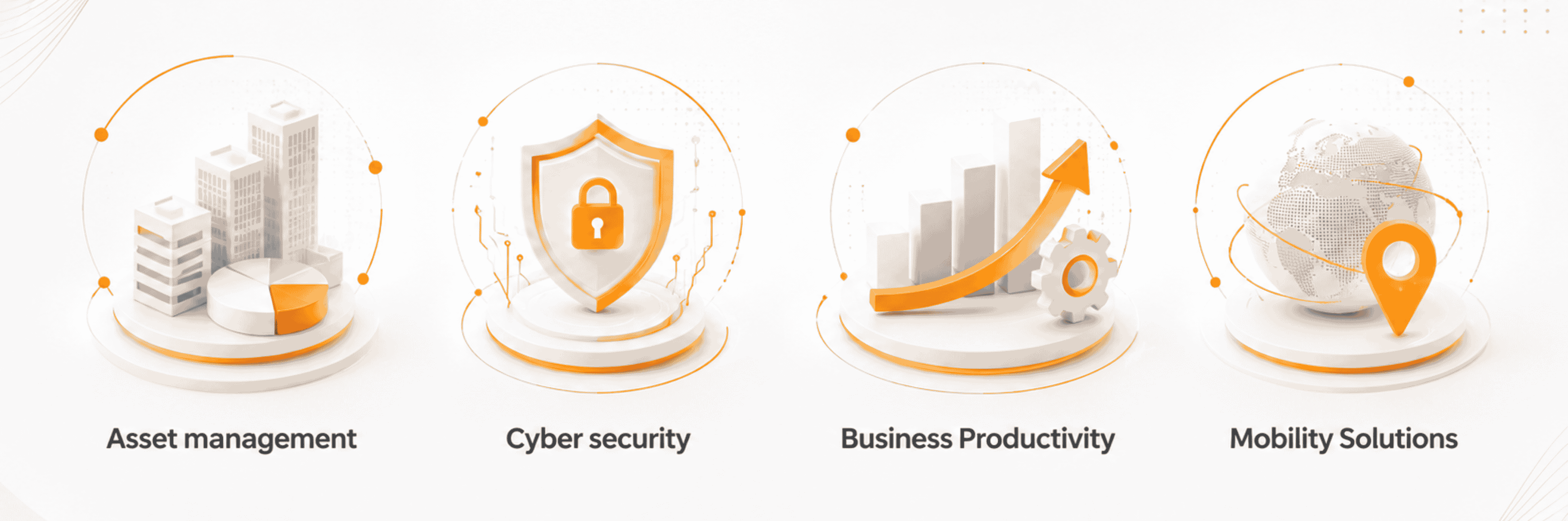
Asset Management
As organizations scale their operations across multiple locations and environments, maintaining visibility and control over critical assets becomes increasingly important for operational stability and efficiency. Asset complexity continues to grow across IT infrastructure, network systems, and distributed operational environments, making effective governance and lifecycle management a strategic priority rather than a technical function.
Alita’s Asset Management solutions help organizations monitor, manage, and optimize critical assets across distributed operations. This enables improved visibility, better lifecycle control, and more informed decision-making that supports operational efficiency and long-term asset performance.
Cyber Security
As digital ecosystems become more interconnected, the attack surface for cyber threats continues to expand. Organizations are now required to protect not only their core infrastructure, but also their applications, data, and operational environments across increasingly distributed systems.
Alita’s Cyber Security solutions help organizations protect digital operations through intelligent security capabilities that reduce risk exposure, strengthen resilience, and support continuous protection across critical business environments.
Business Productivity
Modern organizations are under constant pressure to improve efficiency, accelerate decision-making, and enhance collaboration across teams and systems. However, many still operate with fragmented workflows and disconnected digital tools that limit overall productivity and agility.
Through Business Productivity solutions, Alita helps organizations leverage AI, IoT, data, and automation to streamline workflows, improve collaboration, and enhance overall business performance across operations and teams.
Mobility Solutions
Mobility today is no longer just about transportation or movement, but about enabling real-time visibility, control, and intelligence across mobile operations and field activities. Organizations require smarter systems that can connect people, vehicles, and infrastructure into a unified operational view.
Alita’s Mobility Solutions help organizations enable safer, smarter, and more efficient fleet and mobile operations, improving visibility, operational control, and overall efficiency in dynamic environments.
Delivering Business Value Through Integrated Solutions
While each of the four solution domains addresses specific operational challenges, the real value emerges when they function as part of a connected digital ecosystem. Organizations today require not only individual solutions, but an integrated approach that connects infrastructure, security, operations, and business processes into a unified environment that delivers measurable outcomes.
This integrated approach allows organizations to gain better visibility into their assets, strengthen cyber resilience, improve workforce productivity, and enhance operational intelligence. It is this convergence of capabilities that helps bridge the gap between technology investment and real business impact.
A Strong Foundation for the Future
Alita’s evolution does not represent a departure from its core strengths in digital infrastructure, connectivity, systems integration, and managed services. Instead, it reflects a natural progression driven by the changing needs of organizations that now require more integrated and outcome-driven digital capabilities.
For more than three decades, Alita has helped organizations build critical digital infrastructure. Today, we are evolving our capabilities to help customers generate greater business value from technology while remaining rooted in the operational excellence that has defined Alita from the beginning.
Joseph Lumban Gaol
President Director, PT Alita Praya Mitra
As organizations continue to accelerate their digital transformation journeys, success will increasingly depend on the ability to integrate technology, operations, security, and business objectives into a unified ecosystem.
Building on more than 30 years of experience, Alita continues to evolve alongside the needs of the market through its focus on Asset Management, Cyber Security, Business Productivity, and Mobility Solutions.
More than enabling connectivity, Alita is committed to helping organizations unlock the full value of technology and create sustainable business impact in an increasingly digital world.
Written by
Alita Editorial
Ready to Lead Your Industry?
Transform now.
Tags:
Related Articles
What Should a Company Do in the First 72 Hours After a Data Breach?
A step-by-step guide for companies on handling data breaches in the first 72 hours under Indonesia’s PDP Law.

Private AI vs Public AI: Which Is Right for Your Enterprise?
How to decide where your AI workloads should live, based on security, compliance, cost, and what your organization can realistically operate.